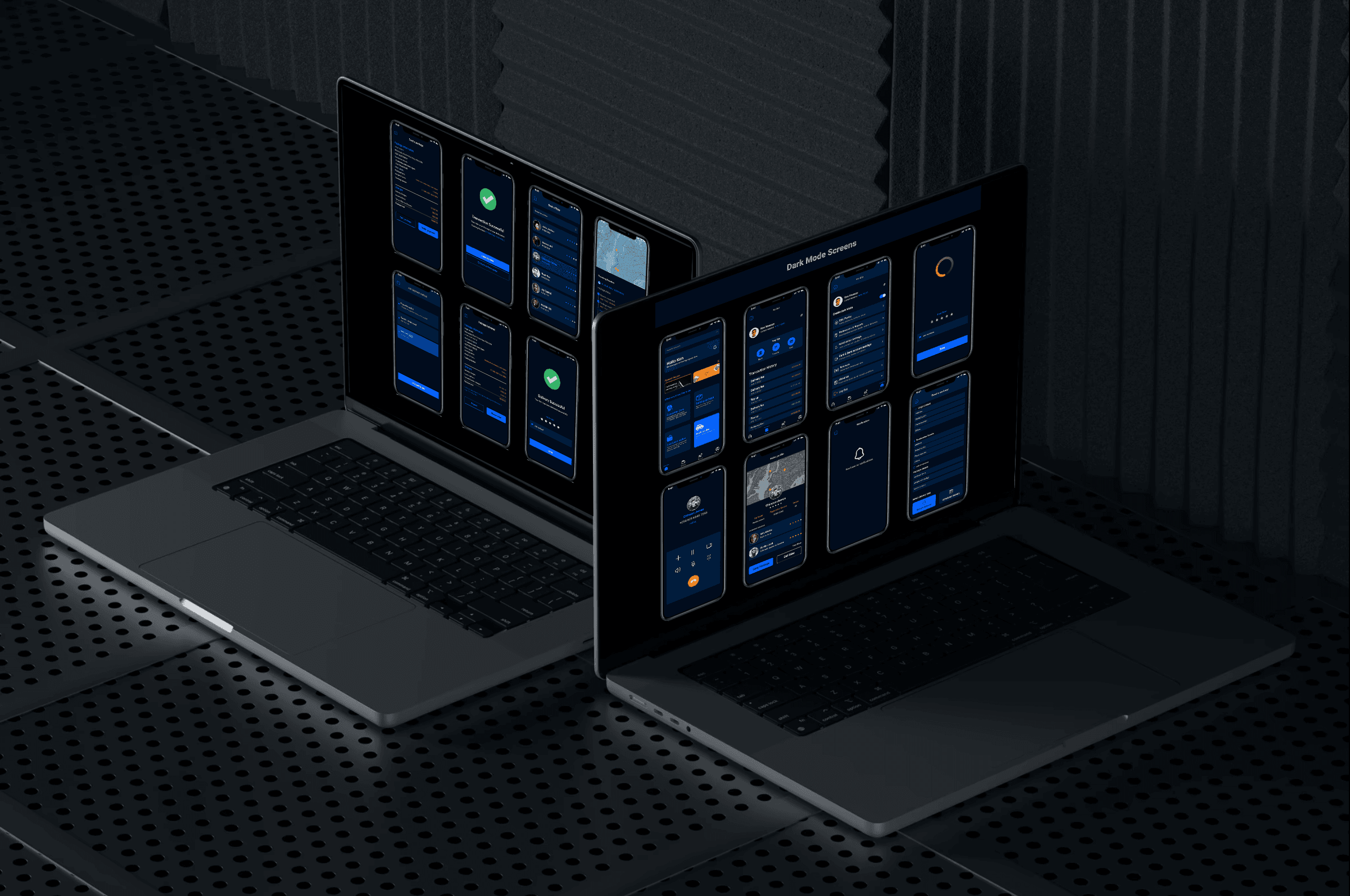
REDI express
A simple door-to-door courier experience designed to make sending, receiving, and tracking packages easier.
00

problem
Sending a package shouldn't require multiple phone calls, trips to courier offices, or uncertainty about where a delivery is. For individuals and businesses, arranging deliveries can often involve fragmented processes, limited tracking visibility, unclear pricing, and concerns about whether goods will arrive safely. As e-commerce, remote work, and digital services continue to grow, users need a faster and more transparent way to move goods without managing the logistics themselves.
solution
REDI brings the entire courier journey into one simple mobile experience. Users can request a door-to-door pickup, enter package and destination details, review delivery costs, choose a payment method, and track their package from pickup to final delivery. The experience was designed around simplicity, visibility, and trust, making courier services easier to access for both individuals and businesses.
The goal was to make requesting a courier feel predictable and straightforward, even for someone using REDI for the first time.
Understanding the Users
I began with qualitative research to understand how people currently send and receive goods, what influences their choice of courier provider, and where existing services create frustration.
A screener survey was distributed through Google Forms to identify participants who had experience using courier and delivery services.
The primary user groups included:
Business owners
Individuals
Remote workers
Companies managing regular deliveries
Participants who were willing to share their experiences in greater detail were invited to virtual interviews.
These conversations uncovered recurring concerns around package safety, delivery reliability, pricing transparency, tracking, communication, and convenience.
Turning Research Into Product Decisions
The research revealed that convenience alone wasn't enough.
Users wanted confidence throughout the delivery journey.
They needed to understand the cost before committing, know when their package had been collected, see its progress during transit, and receive confirmation when it reached its destination.
These insights helped define the core REDI experience around:
Door-to-Door Pickup
Request a courier directly from a preferred location without visiting a courier office.
Simple Booking
Enter pickup, destination, and package information through a guided delivery flow.
Transparent Pricing
Review estimated delivery costs before confirming an order.
Flexible Payments
Choose from multiple payment options when completing a delivery request.
Real-Time Tracking
Follow the progress of a package throughout the delivery journey.
Delivery Updates
Receive clear status updates from pickup through successful delivery.
Designing the Journey
With the research insights established, I mapped the primary user journey to understand how customers should move through the application.
The core flow became:
Home → Request Delivery → Pickup Location → Destination → Package Details → Delivery Estimate → Payment → Confirmation → Live Tracking → Delivered
Mapping the experience before moving into detailed interface design helped identify unnecessary steps and establish a clearer information hierarchy.
The goal was to make requesting a courier feel predictable and straightforward, even for someone using REDI for the first time.
Designing for Simplicity
Simplicity influenced how the entire interface was structured.
Because REDI serves users with different levels of digital experience, the interface uses familiar interaction patterns, clear language, prominent actions, and minimal decision-making at each stage.
Instead of presenting users with complex logistics terminology, the experience focuses on the information they actually need.
Each screen answers one immediate question and guides the user naturally toward the next step.
Building Trust Through Tracking
One of the most important parts of the experience was what happens after the user hands over their package.
Once a delivery begins, control shifts from the customer to the courier. Without clear feedback, that can quickly create uncertainty.
Tracking was therefore designed as a core part of the experience rather than a secondary feature.
Users can follow their delivery through key stages:
Delivery Requested → Driver Assigned → Package Picked Up → In Transit → Arriving → Delivered
This continuous feedback provides greater visibility and reassurance throughout the journey.
Prototype & Testing
The core screens were connected into an interactive prototype to evaluate whether users could complete the delivery process without additional guidance.
Testing focused on critical tasks including:
Creating a delivery request
Entering pickup and destination information
Reviewing delivery costs
Selecting a payment method
Confirming the delivery
Finding package tracking information
Feedback from testing helped identify opportunities to simplify navigation, improve information hierarchy, clarify labels, and make delivery status easier to understand.
These findings were incorporated into subsequent design iterations.
The Outcome
REDI evolved into more than a courier-booking interface.
The final concept creates a connected delivery experience where users can request, pay for, manage, and track deliveries from one place.
By simplifying the booking process and making delivery information visible throughout the journey, REDI addresses one of the biggest challenges in logistics: uncertainty.
The project reinforced an important product-design principle for me: when users hand over something valuable, good UX isn't only about speed.
It's about trust.
Every confirmation, status update, price estimate, and tracking interaction contributes to giving users confidence that their delivery is under control.
year
2024
timeframe
4 Weeks
tools
Figma | FigJam | Miro
category
UI/UX
01
02